There is something unusual about the late evening hours. When the world becomes quiet, when the lights outside soften, when messages slow down and expectations fade, the mind begins to change its rhythm. People often say they work better at night without knowing why. But the night has its own psychology, and for many, it becomes the gateway to deeper concentration, calmer thinking and a creativity that feels richer than anything the day offers.
Night is not only a time on the clock. It is a state of mind.
The Distraction Drop
During the day, the mind is in constant negotiation with the world. Conversations, notifications, decisions, noise, demands. Even when things seem calm, the brain is still processing an endless stream of small signals. All these micro-interruptions fragment attention and drain mental energy.
At night, the world retreats. The phone quiets. The pace slows. The noise fades.
This reduction in external stimulation creates something rare: uninterrupted mental space. The mind no longer needs to defend its attention, and what remains is a sense of clarity that feels almost effortless. Thoughts begin to flow instead of collide.
The Emotional Shift of Darkness
Darkness changes the emotional temperature of a room. It softens edges, reduces visual noise and creates a sense of intimacy. Bright daylight sharpens the mind outward. Night draws it inward. Colors become deeper, sounds feel closer and small details take on new significance.
This inward shift is ideal for:
- Problem solving – Complex challenges become clearer
- Deep work – Sustained concentration without interruption
- Creative ideation – Ideas flow more freely
- Studying – Information retention improves
- Writing – Words come more naturally
The night gives permission for stillness. In stillness, the mind expands.
The Brain's Natural Rhythm
The late evening activates a different cognitive mode. During daytime hours, the brain is tuned to external engagement. It reacts, organizes, evaluates and navigates. At night, when external demands decrease, the brain enters a more associative and reflective state.
This is why ideas often arrive in the evening, why difficult concepts suddenly make sense and why creativity feels richer and more emotional.
Night reduces pressure. Pressure kills creativity. The absence of pressure invites depth.
Why Night Enhances Focus
Focus is not only a skill. It is an environment.
What makes nighttime so effective is the alignment of multiple conditions: a quieter world, softer light, slower pace, emotional calmness and reduced stimulation. Together, these factors create a cognitive landscape where attention becomes steady and natural.
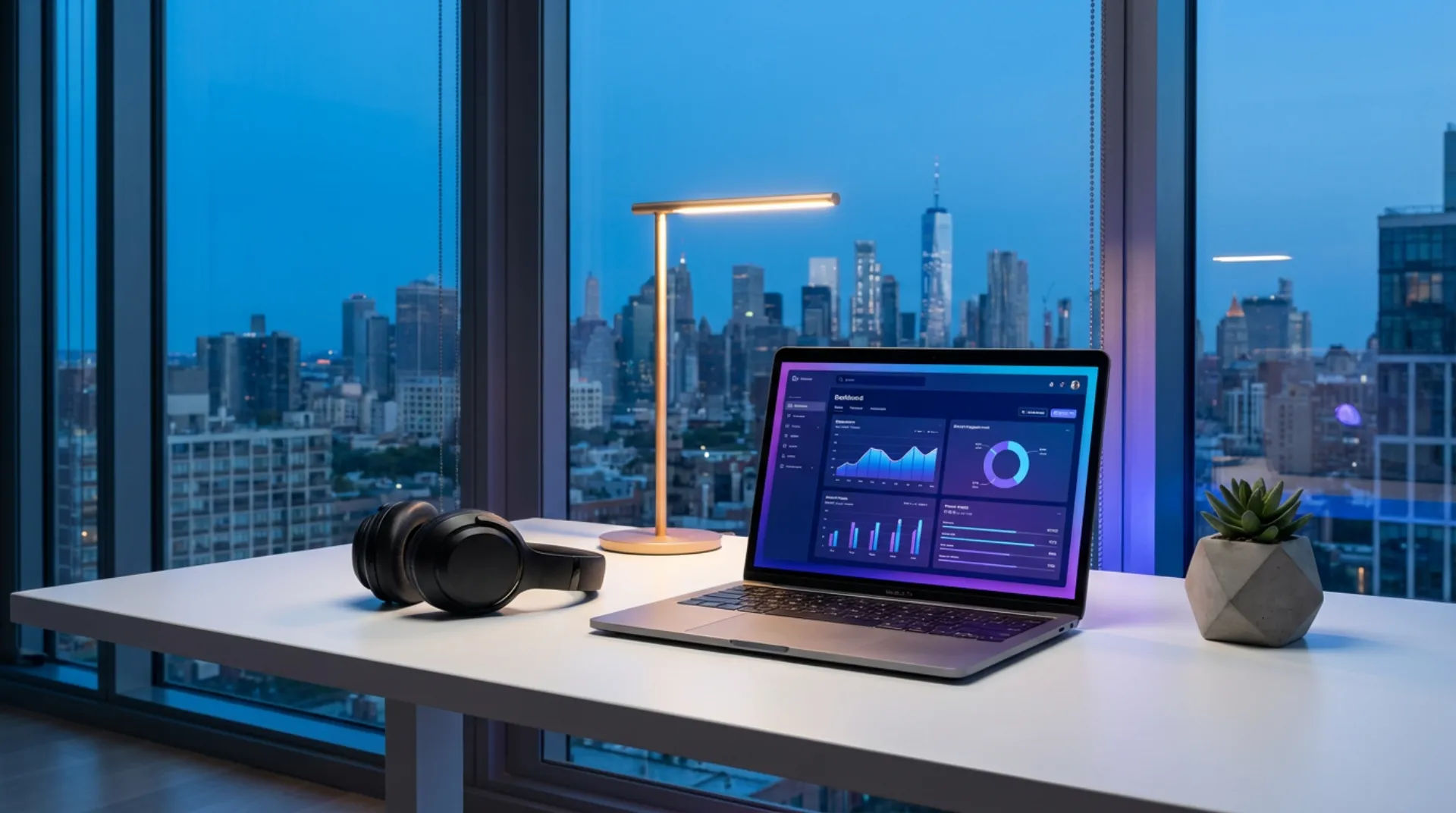
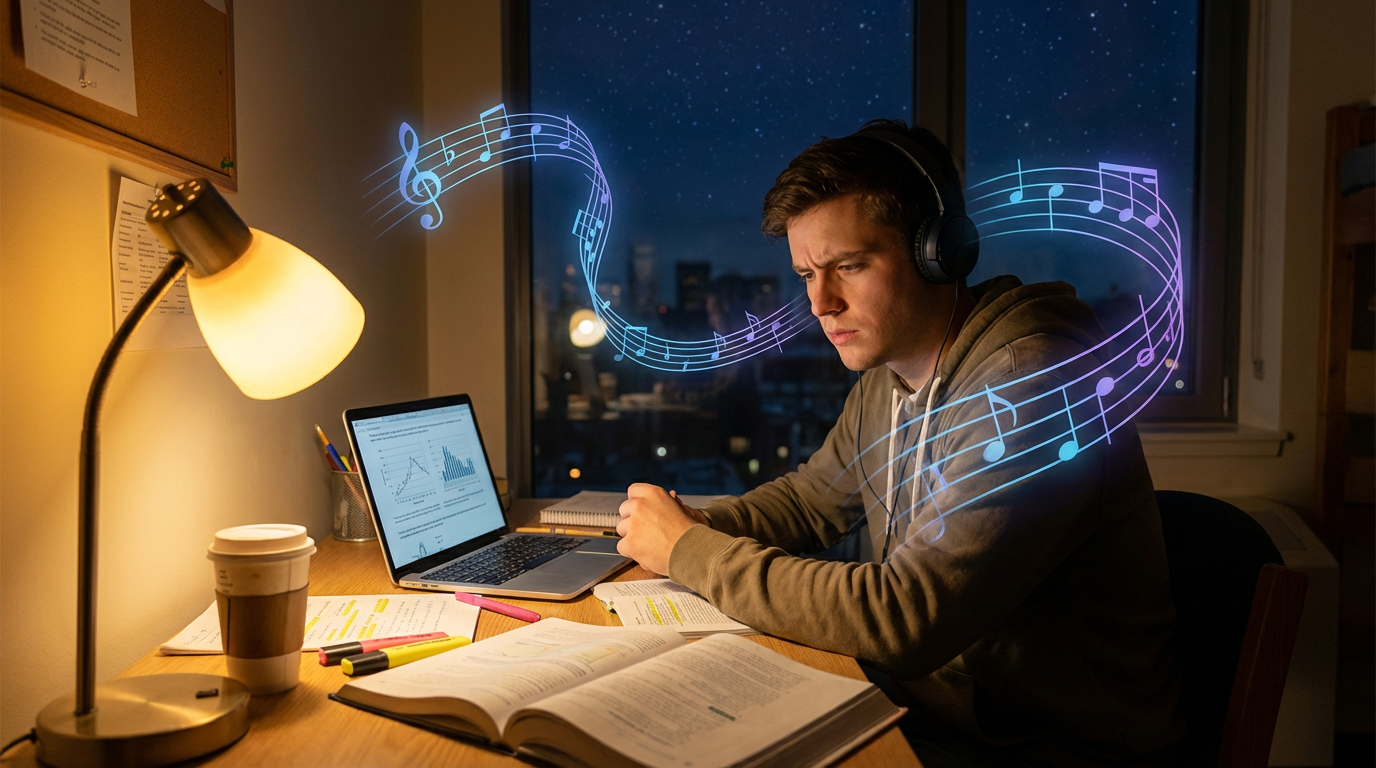
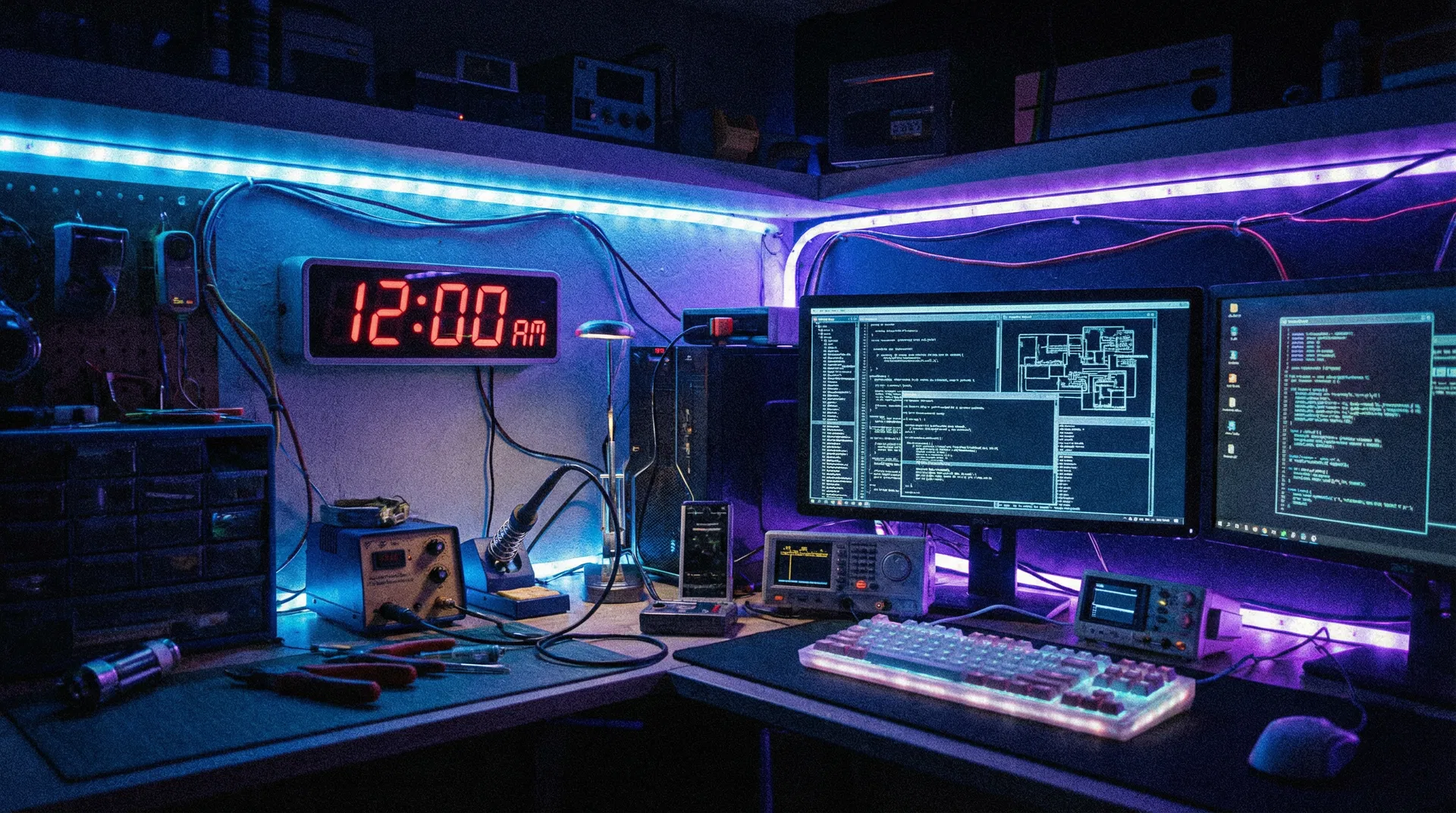
This is the reason so many students, writers, programmers and musicians feel more in tune with their work after sunset. They are not forcing concentration. They are entering a moment where concentration happens by itself.
The Atmosphere of Late-Evening Work
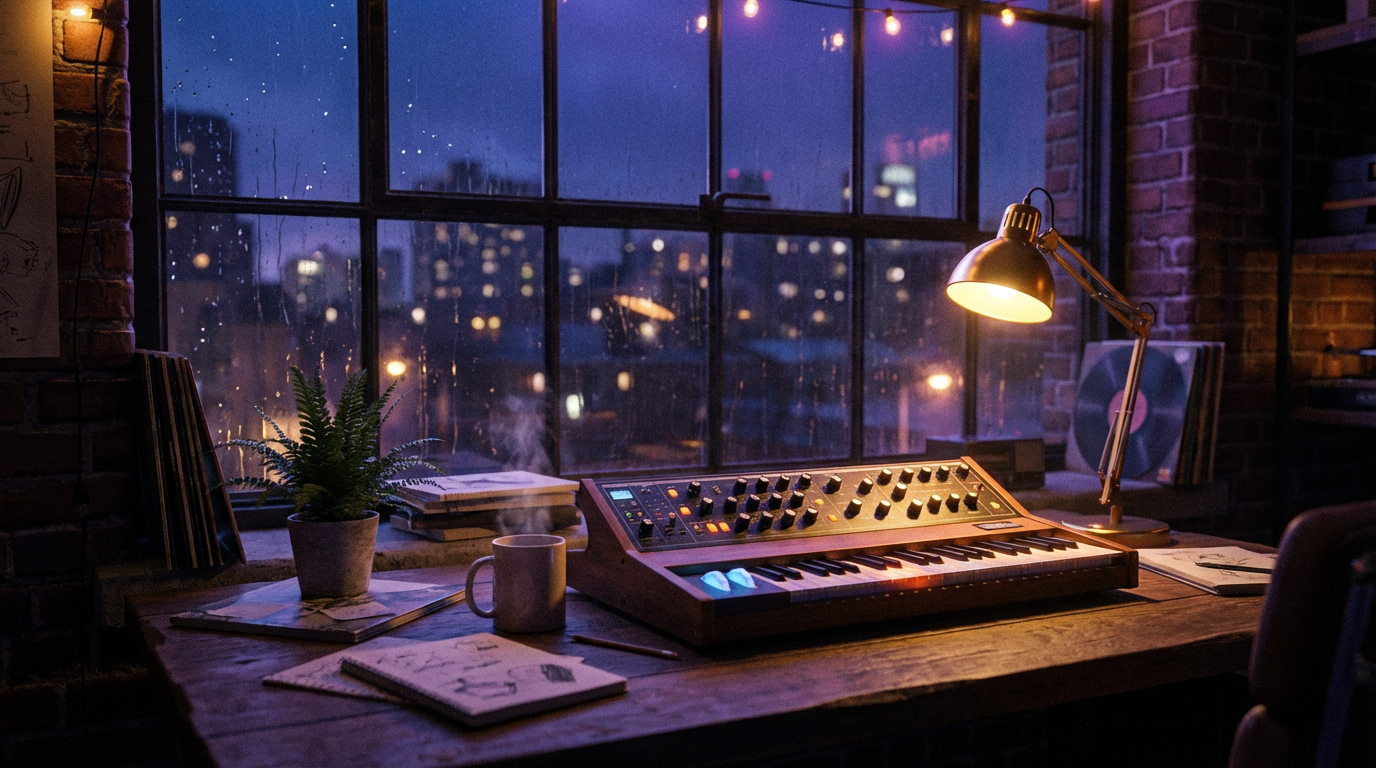
Night has its own aesthetic. Soft reflections on a desk. The glow of a monitor. The hum of a distant street. A cup of something warm beside the keyboard.
These small sensory elements create emotional grounding. They form a cocoon of focus that is hard to replicate during the day. When paired with ambient soundscapes, the effect deepens. Music becomes a companion, not a distraction. It shapes the emotional structure of the moment without taking over.
This is why late-night ambience resonates so strongly. The atmospheres are designed for this exact mental state. They amplify the night's natural clarity.
Why We Seek the Night
People often say the night feels different, but what they are actually describing is the experience of being free from the weight of the day. The world lets go. Expectations lift. The mind is finally allowed to think without boundaries.
Night is not synonymous with productivity. It is synonymous with possibility.
For many, it becomes the most authentic version of themselves: focused, calm, creative and undisturbed.
Conclusion: The Quiet Power of Darkness
The night shift mind is not a mystery. It is the natural result of an environment that supports attention instead of scattering it. When the world grows quiet, the inner world becomes louder in the best way.
Late evening hours open doors that daylight keeps closed. They invite deeper thought, steadier focus and a sense of creative truth that is easy to miss in the rush of the day.
For many, the night is not a time to slow down. It is the moment when the mind finally wakes up.
Experience the night shift mind: Explore Deep Focus Sphere for ambient soundscapes designed for late-night concentration and creative flow.
Related Articles:
🎧 Listen While You Read
From our channel: Deep Focus Sphere
Deep Work – Focus Mode - Night Study Ambient (2H20)
TAGS
Share this article