Why Silence Keeps You Awake: The Psychology of "Silence Anxiety" (And How Ambient Music Helps)
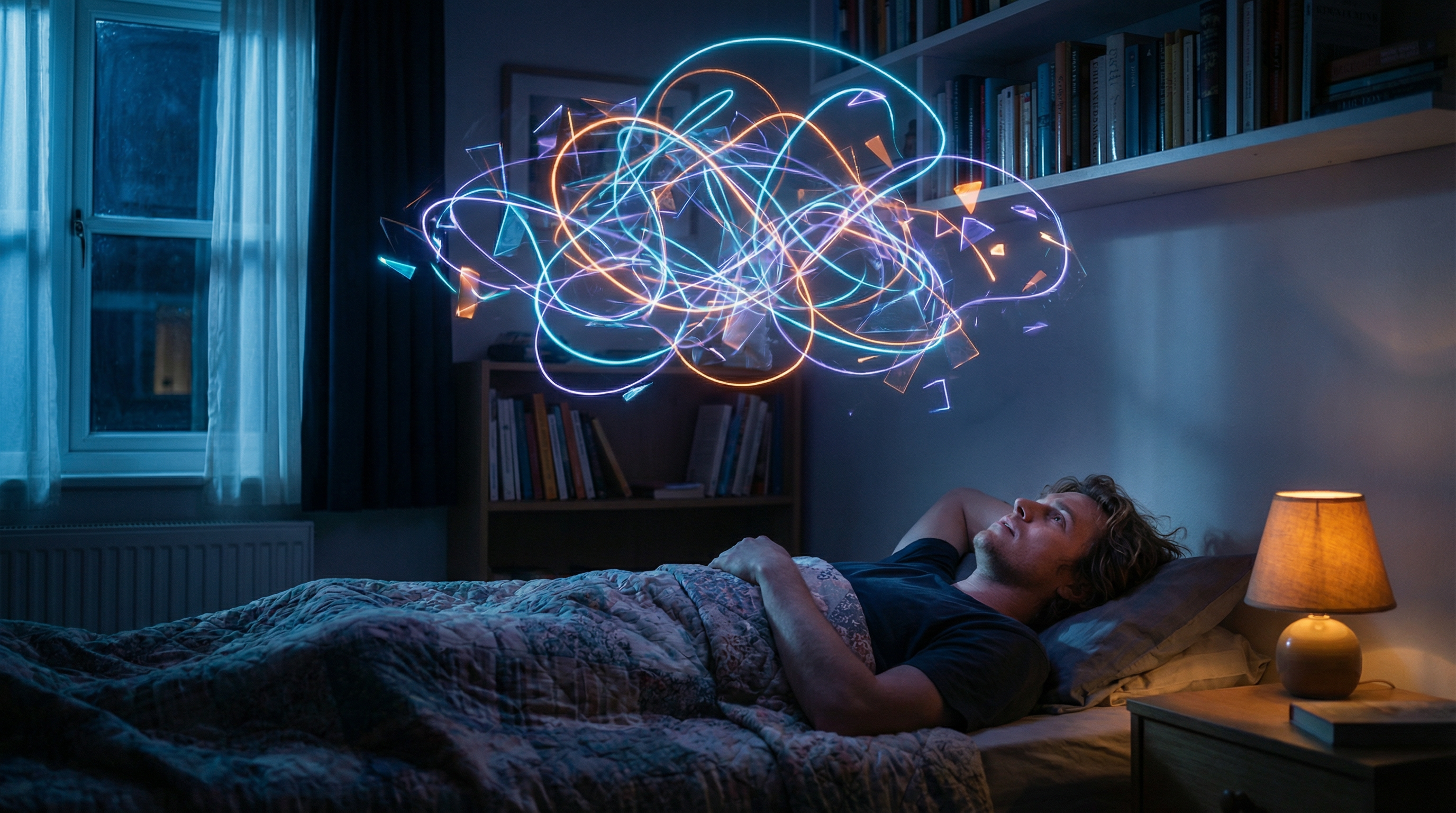
It's 11:45 PM. You're tired. Your eyes are burning. You lie down, turn off the lights, and look forward to some well-deserved sleep.
It gets quiet.
And suddenly, as if someone flipped a switch: "Did I really send that email to my boss?" "Why did I make that awkward joke in 2014?" "What is the meaning of life, anyway?"
Welcome to the club. If you feel like your brain only truly boots up when it gets quiet, you are not alone. This phenomenon is so common that it now has an unofficial name: Silence Anxiety.
But why is this? Why can we sleep on a noisy train but not in our own dead-silent bedroom? The answer lies millions of years in the past – and has something to do with a saber-toothed tiger.
Your Brain Hates Silence (For Good Reason)
Evolutionarily speaking, absolute silence is not a sign of safety. Quite the opposite.
In nature, it is almost never silent. Birds sing, the wind blows, insects buzz. If a forest suddenly goes dead silent, it usually means one thing: A predator is nearby.
Your brain, which is still running on "Stone Age software," interprets absolute silence in your bedroom not as "relaxation," but as Red Alert. It switches into hyper-vigilance mode. It strains to listen into the darkness to hear the snapping of a twig (or the dripping of a faucet).
The result: Your body releases stress hormones like cortisol. Your heart rate goes up slightly. Sleep is out of the question.
The "Default Mode Network": The Inner Tormentor
When there are no external stimuli (no podcast, no music, no conversation), your brain activates the so-called Default Mode Network (DMN).
The DMN is the network for daydreaming, self-reflection – and worrying. It is the part of your brain that becomes active when you are doing "nothing." And because the DMN hates boredom, it starts chewing on problems. It digs up old memories or plans catastrophic future scenarios.
In silence, the DMN has free rein. There is nothing to distract it. Your own thoughts become deafeningly loud.
The Solution: "Acoustic Blankets" (Colored Noise & Ambient)
Here comes the trick that millions of people (and especially the ADHD community) have discovered for themselves: Controlled Sound.
It sounds paradoxical, but to find peace in your head, you need noise. But not just any noise.
Why Ambient Drones Are Better Than Silence
Most people know White Noise – it sounds like aggressive radio static. For many, this is too high-pitched and annoying.
The better alternative is Deep Ambient or Brown Noise. It emphasizes the lower frequencies. It sounds like:
- A distant waterfall
- Heavy rain on a roof
- The deep rumble of an airplane
Why it works: Deep Ambient wraps around your auditory perception like a heavy, warm blanket. It offers your brain just enough stimulation to switch off the "saber-toothed tiger warning system," but is monotonous enough not to trigger the DMN.
It masks sudden noises (like floorboards creaking) that would otherwise startle you. Your brain registers: "Constant sound = Safety."
Conclusion: Don't Fear the Noise
The next time you lie awake and the silence is screaming at you, don't force yourself to be quiet. Your brain is just trying to protect you from invisible tigers.
Instead, give it what it needs: A signal of safety. Try rain sounds or deep ambient drones (like on our Deep Focus Sphere channel).
Sometimes the best way to find silence is to just make it a little louder.
Want to try it out? Listen to our latest Deep Focus Ambient Playlist or visit our Deep Focus Sphere YouTube channel for 8 hours of Deep Focus Sounds.
If you found this interesting, you might also like our article on The Best Study Music According to Harvard Neuroscience.
🎧 Listen While You Read
From our channel: Pianosphere Radio
Piano Melodies in the Rain - 2 Hours of Dreamy Soft Music for Peace & Sleep
TAGS
Share this article